
How to Perfect Your Choux Pastry
- Jul 30, 2017
- 6 min read
What is pâte à choux?
Pâte à choux is a twice cooked dough/batter that is used to make the crisp, hollow shells of cream puffs, eclairs, and churros (which are more or less hollow. It can be used in french gnocchi, and simmered into pillows of potatoey goodness, or fried and rolled in cinnamon sugar. They can also be piped out and baked, either in the shapes of cream puffs and eclairs, and allowed to crisp up in a warm oven. They can be mixed with cheese and served warm as gougères.
I like to fill mine with pastry cream, whipped cream, crème de St. Honoré, a pastry cream lightened with whipped cream or a meringue. It's traditionally used in St. Honoré pastries, which is a layer of puff pastry, topped with caramel coated cream puffs and the aforementioned cream.
It's made by bringing butter and water/milk to a boil, with some salt and sugar, and dumping in flour and mixing it off heat.

I've heard this described as "shocking the flour." The most notable difference is that boiling water and flour together creates more lumps than if dumping it in after the water is boiling, which produces much more cracking.

After it's thoroughly combined, I mix it over a medium flame until a film of starch starts to form in the pan, and mix it until it's cooled (remember, stirring things makes it cool faster) and add the eggs.

The egg part is where it gets weird. You'll see that my recipe for it has 4 eggs listed, however; they may not all be used. I prefer to crack them into a measuring cup and just pour them in small glugs (a very official term, indeed) at a time.
But will they pass the test? Add 3/4 of the eggs and test it. Wet a finger, and run it through the top of the mixture. It should form a canal in which the sides do not fill and form a small peak where your finger was pulled away; if it falls, stir it for a while longer to form more gluten. If it still falls, add more flour. If a large peak occurs or it seems too dry, keep adding eggs. Passing this test ensures the most dependable eclairs.

Another test to pass, which can be seen if using a stand mixer, is seeing if a "V" will form draping off of the paddle attachment. It should be an elongated V, not short due it being to thin and having dripped off, nor be a thick lump. This one may be easier to identify for beginners than the trench-peak thing spoken of prior.
Just do what works for you.
The Importance of each ingredient:
Flour: Flour, as any other recipe, forms the body of the pastry. Because choux pastries depend on holding steam in order to rise, gluten development is crucial. The same protein that makes cakes, pancakes, or other pastries tough (due to overmixing/overstimulation of the gluten) makes bread, pasta, and choux dough firm, stretchy, and able to entrap air. It's not something necessary in pasta, however; it's critical in situations like bread or choux. Due to its higher protein content, I prefer to use bread flour when making choux. All-purpose will work fine, but is not as dependable, as eclairs tend to fall flat or end up full of pastry, rather than form a hollow shell. Cake or pastry flour, should be avoided in this recipe, as it has an even lower gluten content than all-purpose.
Water/milk: Water is the base of many pastry recipes, it hydrates flour, makes for a tender crumb and crust, and is virtually always available. (Friendly reminder that as of now, late July, 2017, Flint Michigan still doesn't have clean water!) Milk produces a browner, crispier crust, but doesn't let the pastry rise as much as water does. I like to use a 1:1 ratio of water and milk.
Butter: Like most fats, butter adds tenderness to mixtures, due to its inability to stimulate gluten formation like water does (unless it's hot, of course). I prefer to use butter over vegetable oils, because it adds more flavor due to its milk fat content. Like milk, it also produces browning and decreases rise.
Eggs: The source of steam necessary for rise in many recipes, such as sponge and angel cakes, macarons, and soufflés, are eggs, and these attribute to the rise in choux paste. They may be used more or less in recipes, depending on how the pastry was taken care of, or the environment, which is why I prefer to crack and stir them in a measuring cup, and test to see if I need all of them.
Salt and sugar: As in any recipe, salt is crucial for flavor. Salt-free pastries end up surprisingly bland, so I never recommend skimping on it. Even my non-baking recipes like sweet sauces or fillings involve at least a pinch of kosher salt. Sugar, on the other hand, adds sweetness and can be used more freely. They must both be entirely dissolved, or cracks will form, which makes an even glaze difficult to achieve, and not the most sightly eclairs. Salt does a better job at preventing cracking, however; it makes the pastry taste saltier. Not a problem in savory recipes like gougéres, but not always the most ideal in sweet filled pastries.
The type of piping tip: I always use one of the star tips with a lot of teeth. Roughly 1/2 inch in diameter. The ridges help to prevent cracks significantly. Please invest the $0.99 it takes to get one, I promise they'll glaze and bake better. I also always pipe mine at a 45 degree angle from the pan. To finish an eclair, I drag it quickly back over piped eclair, which destroys some of the ridges, but very few if done effectively. You may do a "whip" motion and quickly tear the end of the eclair away by swiftly twirling and pulling the pastry bag away.

Glazes: Pouring fondant, royal icing, simple powdered sugar glazes, ganaches, caramel, powdered sugar, whichever you use, make sure that they aren't so thin as to provide a translucent glaze, the only exception being caramel. Make sure it's clean too! with a gloved finger, I run a finger around the choux, wiping any excess drips off (unless its caramel, which is hot).
I once made pecan-almond praline eclairs by making an almond-pecan custard, glazed them with caramel, and sprinkling with pecans before it set.
To Egg Wash or Not To Egg Wash:
Egg wash provides a pleasant brown crust on pastries; but if dripped over the side of a choux and onto the pan, it will prevent it from rising, or form cracks in the eclairs. Also, brushing them tends to destroy the ridges we've worked so hard on. But we can't have a pale, soft eclair, now can we?
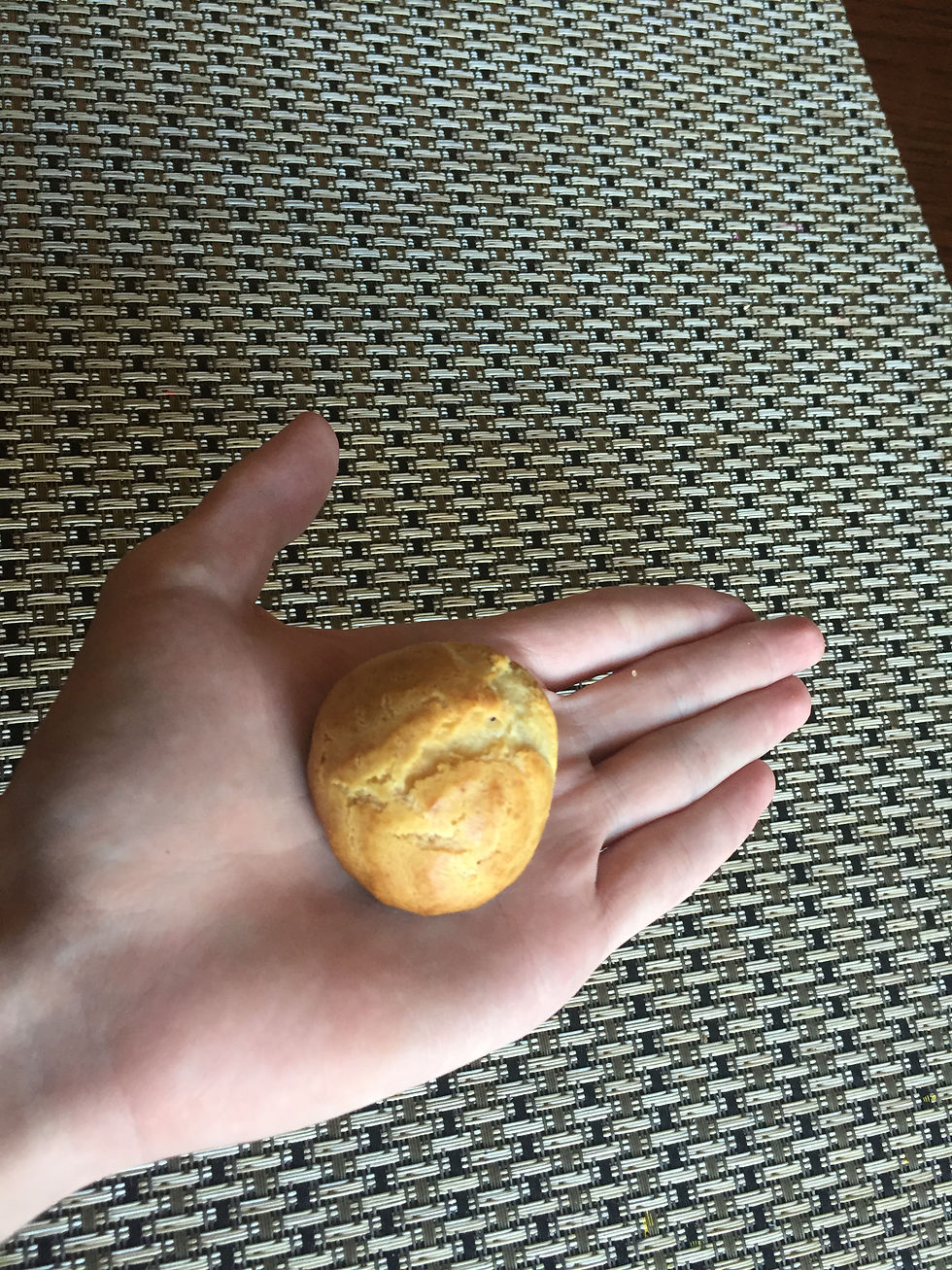
The solution? Powdered sugar. This caramelizes the eclairs, giving a browned, crisp crust, and us also much, much easier, and who really wants to waste ANOTHER egg? Between the eggs for cream puffs and pastry cream, you're using an awful lot of eggs in one day.
Sweet Choux:
1/2 cup water
1/2 cup 2% milk
6 tbsp butter
large pinch of kosher salt
2 tsp sugar
3/4 cup bread flour
4 eggs, stirred together in a measuring cup
Savory Choux:
1/2 cup water (118 ml)
1/2 cup milk
6 tbsp butter ( 3 oz)
1 tsp salt
Large pinch of pepper and nutmeg
3/4 cup of bread flour (6 oz)
4 eggs, stirred together in a measuring cup
Preheat oven to 350 F (177 C)Bring the butter, water, milk, sugar, salt, spices to a boil, stirring constantly in order to ensure dissolved sugar/salt and to avoid scalding the milk. Once it boils, add all of the flour at once and take it off the heat. Stir constantly until lump free, and return it back to a medium low heat, taking care not to scrape the bottom of the pan, as you'll scrape up the film, which may cause cracks or you may remove too much of the water. Do this for about two minutes, it should form a ball of dough. Remove it from the heat again, stirring and mashing it until it is no longer so steamy. Remember: gluten formation is essential! Add 1/4 of the egg mixture three times. It will come apart before it comes back together, so don't be scared. Test the dough by wetting a finger and running a trench through the batter, the walls should not fill in and a small peak should form, without the batter being too dry. It should be somewhat shiny. Add the eggs until both of these are met, and fill a pastry bag fitted with a star tip with many teeth. Place a silpat or piece of parchment paper in a baking pan, pipe two tablespoon piles for cream puffs, or 5 inch by 1 inch lengths for eclairs. Dust with powdered sugar. Bake eclairs for ~40 minutes, cream puffs for 30-35, and remove them from the oven. Slit the bottom of each eclair, or cut them in half horizontally, and put them in a turned off oven kept open with a wooden spoon for 10 minutes. Fill them by poking three holes in the bottom (one for cream puffs) or by placing cream over one half and stacking the other (glazed) half over it.

Comments